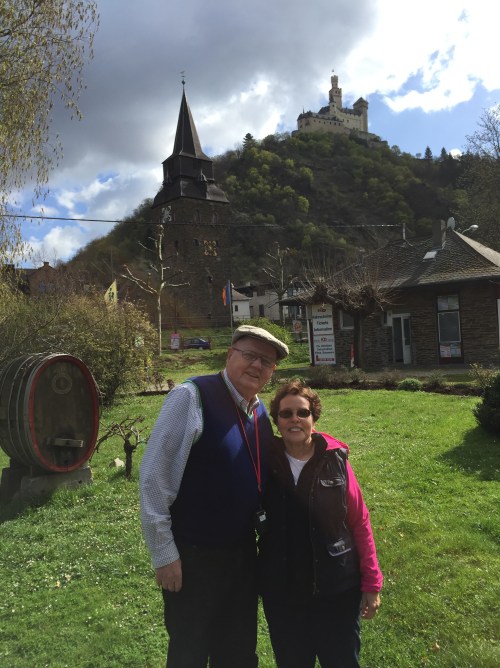
I am amazed at some of the new features on Ancestry. I actually proposed two that they made. One was to allow users to categorize their ancestors using self-defined codes so they could be easily sorted into groups. When you have over 4,000 people in a tree, it is difficult to remember how many you have in one family line for instance, when you are researching that specific line. The other was to use the entire site to build hypothetical trees for those new to Ancestry. They did this even better than expected and created “Thrulines” to show who you may be kin to through a specific ancestor. This is the most helpful feature they have ever added!
In addition to Ancestry, I have accounts with 23&Me and Family Heritage. The former I find somewhat useful in compaaring DNA results and very useful in identifying genetic traits, but the second is simply another “Ancestry” with FAR fewer features and people using it.
I am finding numerous ancestors, and every day, I am adding to my family tree. It now has over 4,000 people and only my personal time is limiting even faster expansion. The further back you go, the closer you have to check. It is a crying shame to add fifty or more people and then realize you were going up the wrong tree! Literally. On the other hand, it is easier to till plowed ground and the further back you go, the more people there are looking for the same person. The new “Thrulines” feature really helps here. If you are connected to only a couple of people through a 5 GGF, then it may not be valid. But if you are connected to 20 or more and they come through different lines, you can be pretty confident you research is correct.
One of the newest features that is a part of Thrulines is the “Common Ancestor”. It not only looks at your tree, but the trees of everybody in the database to connect you to people who have just started looking. I have several new connections to people with a dozen or fewer people in their trees. They can do this through a DNA match and by finding the missing ancestors in a third party’s tree. or even several third party trees. This has the potential to connect everyone in the world to most of their ancestors. I have one line that goes back to both Charlemagne and William the Conqueror (and even further). But I am only about 75% confident that line is correct. I will discuss that below in the section on Emmanuel Rodriguez, one of my 9 GGF’s, who I am virtually certain is my ancestor.
DNA and Ancestry
Before going on, I want to give you a short tutorial on DNA and how Ancestry.com uses DNA to measure a person’s relationship to another person.
Each Human has basically the same DNA structure. That is what makes us human as opposed to a chimpanzee or a rose. There are certain segments of DNA that are passed on exactly from one human to the next and there are segments that vary over generations based on your specific family. Generally, you inherit almost exactly 50% of your DNA from each parent. There is a very small segment of DNA that is passed on from mother to child and then passed on by daughters to their children, This is called Mitochondrial DNA and means you actually get a very small fraction of your DNA from your mother than your father. Other than for tracing the family line it is not that important in genealogy so we will ignore it here.
Since we inherit half our DNA from each parent, we know our siblings do also. However, they do not inherit the same DNA. On average, they inherit half the same DNA and half different. But, this is just an average and can vary, like items on a bell curve, with most being clustered close to 50%. This applies to the next generation proportionally. Thus, we expect someone with 50% of the same DNA to be a sibling and someone with 25% the same DNA to be a nephew, niece, grandparent, uncle or aunt. 12 to 13 percent is thus one generation further. This would be a first cousin, great grandparent, grand niece or grand nephew or great uncle or great aunt. This works all the way out to being able to reliably detect people as being related that share a fifth great grandparent. But it will sometimes even detect out further and sometimes not quite so far, as by that time you may share as much as twice as much DNA with an individual as with their sibling.
One interesting note on this. Identical twins share 100% of the same DNA.
My Genealogy – A Study of a Deeply Rooted Virginia Family
My family’s roots run deep in Virginia, to a truly remarkable extent. While I do not have a lot of famous Virginians in my family tree, I do have a few prominent folks as well as a few surprises. And there are more interesting limbs on my tree than anyone should expect to find. Therefore I feel compelled to share it, warts and all.
I have identified as of this moment, all 32 of my Third Great Grandparents, 48 of my 64 4 GGP and 80 of my 132 5 GGP to such a clear degree that I have Ancestry.com DNA connections to them. I have identified several more of each that as yet, I have no direct provable connections to. Thus, I am certain of all 32 of my 3 GGP’s, and all of my 4th and 5th GGP’s that I discuss, unless I clearly say I am not certain. However, even on those, if they are here, I am at least 75% sure.
Note: This is not a strict linear text, as I find it Both easier and more interesting to describe some lines differently. Some I start with close family and go backward, others I start with the earliest reliable connection and come forward, occasionally branching into female lines while discussing a male line by last name.
I have aimed to only include proven links rather than speculation or even those based only on weak evidence. When I include some of the speculative links, I will clearly say so.
Whenever I wanted to know some family history, I had few options. If it involved asking Grandma, who really didn’t know a lot or asking Mama, who didn’t (wouldn’t?) tell a lot, I learned very little. Mama occasionally did tell me a good deal, but only when she wanted to. Seldom could I ask and find out anything that she wasn’t ready to tell.
My father wasn’t around to ask and my older brothers and sister knew less than I did, once you got beyond people they had known. My father was an only child and my mother was one of two surviving children, so I had her brother, Laurence’s three children as my only first cousins. I saw them twice a year or less as they lived over 100 miles away. Uncle Lawrence owned half of the farm where I grew up and came alone to hunt a couple of times each year, so I saw him a lot more than the rest of his family. But I never thought to ask him any family history.
Larger families have a much easier time tracing their genealogy, simply because there are a lot more people looking and in a couple of generations, this may mean the difference between a handful of people searching and more than several hundred searching. As my families were relatively small for several generations, Grandma’s McDonald and Deacon families excepted, I have had little help in finding anyone in the first few generations. I did find some members of my Mother’s Swan and Cobb families several generations removed, but nothing on the Gilliams or Wilkersons. I had to dig that out 100% myself.
My closest DNA relatives who have their Ancestry.com DNA are a grand-niece (860 people in her tree but mostly cloned from my tree) and grand-nephew (7 people in his tree) and a second cousin in the McDonald family who only has 17 people in his tree. I also have a son of one of my three first cousins, but he has only 7 people in his tree.
I knew, on Mama’s side, a lot more about her mother’s family, the Gilliams than any other branch of my tree. My twin cousins, May and Kay, and their double first cousin, Linda, were close to my age and I saw them frequently. They were the closest people I had to first cousins although technically, they were half second cousins. Their mothers were sisters from the Brooks family and were not blood kin to me.
Their fathers were Gilliam brothers by my mother’s grandfather, Charles Bruce Gilliam’s second wife, Aletta Reynolds. My mother’s mother (Mable Clair Gilliam) was his oldest child, by his first wife, Bettie Moon Cobb. So Mama was their half first cousin and I was half second cousin, or as a lot of Southerners and Ancestry put it, my first cousins once removed. But, again, I always felt they were the closest kin I had outside my immediate family. Charles Bruce Gilliam’s only other child by the first wife was Laurence (no middle name) Gilliam, three years Clair’s junior. He was my great uncle, not to be confused with Mama’s brother, my Uncle Laurence Gilliam Wilkerson who was named after him.
The second Gilliam children included May/Kay’s and Linda’s fathers (Frank Wilson and Charles Bruce, Jr), Elizabeth (Libby) and Wiley. I seldom saw Libby’s children, Jean and John, and do not recall ever meeting any of Wiley’s children, so they did not seem as close kin. I saw more of Aunt Libby than her children as we often went over after visiting Aunt Janie, who we will get to later. But her children were very active and seldom home.
Aunt Libby was special in a number of ways, a couple being she was the first Nurse Anesthetist in Virginia and had to go out of state to get her graduate training and also she lived to be over 100. I attended her 100th Birthday Party in October, 2010.
Another thing special about her was that she had one of the most pleasing accents I ever encountered. It was similar to my mother’s but more pronounced. Where they got these accents, I’ll never know. They both sounded far more sophisticated than their upbringing would indicate. That they had this in common is no surprise as they grew up as sisters. As I mentioned, Clair, my mother’s mother, died when Mama was eight. So, she went to live with her grandfather, Charles Bruce Gilliam, Sr., rather than be a motherless girl with two older brothers as her only company. I am sure this was not her choice to make, but do not know how it evolved. Libby was only a year or two older than Mama. And Poppa Gilliam’s second wife, Aletta Reynolds Gilliam, or Granny Bruce as we always called her, was still a young mother.
In fact, she died in 1962, just 10 years before my mother, who was younger than her two oldest children.
Ironically, also at Aunt Libby’s birthday party was her high school classmate, Benny Massey, who had been a very good mentor type friend when I was young. His wife was my mother’s best friend in high school. His daughter, Beth was about two years younger than me and she and I often went out onto their farm with him when we visited, while Mama and Nona talked. He was actually older than Aunt Libby. I had not seen him since I finished high school. Even more astounding is that there were only seven students in their high school class and another classmate, who had planned to attend, died just a couple of months before the party. 3/7th of the class lived past 99 two past 100 and one past 101! Libby died two months before her next birthday. At 100, she was living alone just across the street from her son John and his wife. Only a couple of years earlier she had lived in the house where her children were born, which shared a back fence with her house where she spent almost 80 years, as John had moved as close as possible when he retired years earlier. When she died, she had been living a few months with her daughter, Jean, in Maryland.
So, I knew many of the Gilliams but few of the Wilkersons. Two of Uncle Laurence’s three children were older than my sister who was seven and ½ years older than me. The third, Jack, was a pain in the ass and was three years older, very tall and a rabid bully. Nothing to get to know there! I was glad I seldom saw him. All he was good for was getting some quality hand-me-downs from time to time, as his clothes, used, were nicer than mine new. Mama’s mother died when Mama was eight and her father died two years before I was born, so I had no sources there. About all I knew were there were some people named Swan in the family, from Granddaddy Wilkerson’s mother. I never met a Swan nor a Cobb for that matter, that I remember. However, when I was about seven or eight, Mama and I visited a cousin between Pamplin and Darlington Heights that may well have been a Cobb. I simply do not remember who she was.
Mama did tell me one day, out of the blue, about her great grandmother Bettie Ann Dillon, who was her mother’s mother’s mother. This was, of course, my all-important Mitochondrial DNA line. But neither of us had a clue about that at the time. It was still undiscovered.
From what I have said so far, it would seem the Gilliam family would be the best place to start. And that is what I did. Unfortunately it was not a very fruitful search for quite some time, so I eventually turned to other lines of the family tree.
But, here, since I have already started about them, I will cover this family.
The Gilliam Family
Poppa Gilliam (my other namesake for the Bruce) properly Charles Bruce Gilliam, Sr. was born in Halifax County, Virginia in 1856. His father, Charles Henry Gilliam was an overseer on the massive Bruce Plantation. I say “an” overseer because there were at least two and likely more. Also on the plantation and an overseer was another second Great Grandfather of mine, Thomas Moon Cobb. His daughter, Bettie Moon Cobb married Charles Bruce Gilliam and their oldest child was my Grandmother, Mable Clair Gilliam. Clair, as she was known, was the one who died of Tuberculosis when Mama was eight. Bettie Moon Cobb had also died of TB at a young age. Bettie Moon had one other child, my Great Uncle Laurence (no middle name) Gilliam. He was one of the most interesting members of the family that I actually knew.
Around 1930, he, his wife Eunice Anderson and his nephew, Laurence Gilliam Wilkerson – Mama’s older brother – the older Laurence never had children – moved to Rich Creek, Virginia and started a cinder block manufacturer, using cinders dumped there by the frequent stops for more coal of the Norfolk and Western Railroad’s engines. With free materials, they were able to amass a small fortune. After several years, they sold this business and settled in Roanoke, Virginia and opened a new Hudson automobile dealership. Once again, they did well and sold this after a few years, apparently before American Motors, whose flagship was the Hudson, fell on hard times.
Charles Henry Gilliam, who fought in the Civil War to defend his employers, right to own people was the son of XXX
The Deacon Family
On the other side, Grandma was a McDonald and she told me her parents were Emily Jane King (wrong) and William Ross McDonald. She also gave me the names of all four of her grandparents, but confused the name of Emily Jane with her own grandmother, who was in fact Charlotte King. I finally got that straight on Ancestry.com. Emily Jane was a Deacon and Grandma never talked about John Deacon, her Grandfather, except to tell me his name when I wrote it all down just a few years before she died in 1979. She must have known him as he was living very near her in Lynchburg from about 1880 or 81 until he died in 1909. Grandma would have been about 15 then.
She also never mentioned his wife Charlotte as she always referred to both her mother and Grandmother as Emily Jane. I remember many times she told me she was the daughter of a King of England. Actually she was a granddaughter of Charlotte King. Of course, I always wondered how much of this I got confused as a kid. But I was always a stickler for accuracy, and have always had an uncanny memory. I never knew that any of Grandma’s maternal family came to America except her mother.
John David Deacon came to America, probably through Ellis Island in December 1880 XXXD and seven of his 10 children and wife Charlotte came too. But they came slightly later and I have yet to determine how or exactly when. At least Emily Jane and her older sister Lottie, were born in or very near Almondsbury, Gloucestershire, England. His three youngest children were born in Lynchburg, Virginia. I visited the church in Almondsbury where she was christened (1870) in March, 2017. XXXP
Clan McDonald
Grandma never said where her father, William Ross McDonald was born, but somehow, I got the impression from her that he was directly from Scotland and had also come to this country as a young man. I always wondered how a Scot immigrant and an English immigrant (Emily Jane Deacon, aged about 15 when she came to America) had met and married. Turns out, he was born in Richmond Virginia to a father who came from a long line of McDonalds that had been in this country since 1748 and had lived in Culpeper, Virginia for many generations, his father being born in Culpeper, as were several of his predecessors.
Alexander McDonald, my 6 GGF (sixth great-grandfather) was born in Aberdeenshire, Scotland on January 14th 1695 and was a member of the Highlands Clan’s private army that was loyal to the Jacobites. In England and its holdings. only the Scot Highlanders had private armies, other than the East India Company, which had a very extensive private army based in India.
The Jacobite goal was to restore the Stuart monarchy in Britain and put, first, James III, then when he died, his younger brother, Bonnie Prince Charlie, on the throne of Britain. At the time, first the daughter of James II, Mary II and her husband, William III, also known as William of Orange, were on the throne, then Mary’s sister Ann and finally the first Hanoverian King, George I held the throne. The English were determined not to get into religious civil wars again and George Ludwig of Hanover, was chosen as king and ruled as a Protestant whereas James and Charles, Mary’s half-brothers, were passed over as they were Catholic. By normal rules of succession or primogeniture, James III as he styled himself, was the rightful King of England and Scotland.
Many people throughout Great Britain were unhappy with a German on the throne who spoke no English. George was the closest Protestant kin to Ann, but there were at least 50 Catholics with better claims. James, a Catholic, was Ann’s half-brother. George was the great grandson of James I (ruled 1603-1625 as King of England) through his daughter, Elizabeth, who married Frederick V, the Elector of Palatine and their daughter Sophia who married the Elector of Hanover. Thus, he was Elector (sort of a lesser German king) of Hanover and King of England at the same time, the first of several English kings to hold both titles. The titles separated when Victoria became Queen of England in 1837 as the crown of Hanover could not pass to a female under the rules of progeniture in effect in Hanover.
Victoria’s Uncle Clarence, a younger brother of her late father (the Duke of Kent) who was the Duke of Cumberland, thus inherited that throne as the next male in line to the English throne. Once Victoria had a child, that pushed Clarence further down the line. As she outlived Clarence by many years, it later became a moot point.
When the Jacobites were soundly defeated (1748 in the Battle of Culloden (this was after James III’s death), Charles or “Bonnie Prince Charlie”, who now claimed to be Charles III, fled to France to avoid the ax for treason. Many of his top supporters were killed in battle or executed in the Tower of London for treason. Alexander McDonald and about 1,200 others were banished to America (this was before the penal colony in Australia was established) with their families. The private highland armies were then abolished.
Note: History records another, more important Alexander McDonald, who, in fact, was the leader of all the Scot Clans at Culloden. This is not my Alexander, nor is he any other American who claims him as immigrating to America after Culloden as he was killed in the battle. His remains were clearly identified by the British General who knew him well.
Thus Alexander McDonald and his large family came to Culpeper, Virginia. His wife, Isabella McLaughlin accompanied him. That migration included his then 15-year-old son, John, my fifth great-grandfather. An old Virginia manuscript, “Scots on the Chesapeake” lists Alexander arriving in 1747 on the ship Gildart as a Jacobite, sailing from Liverpool to North Potomac.
On February 14, 1763, John married Susannah Edgar Corbin in Culpeper, Virginia. They had four surviving children including the youngest, Ambrose Corbin McDonald, my fourth great-grandfather (1788-1827).
My third Great-grandfather in this line was Silas McDonald, Ambrose’s Son, born December 1, 1810 in Culpeper. His son, John William Parker McDonald, my second great grandfather, was born in Culpeper in 1839.
My Great Grandfather William Ross McDonald was born in Richmond on June 27, 1866 and died in Lynchburg in 1927??. On May 23, 1887 he married Emily Jane Deacon in Washington, DC. XXXD
They had at least eleven children, the third of which was my grandmother, Alpha Elizabeth McDonald, born in Lynchburg on July 30, 1894. She was my father’s mother, having married Howard Lee Floyd.
Among her siblings, I knew Janie, the youngest far better than any of the others. Grandma made numerous trips from Prospect, where we all lived, to Lynchburg to visit her and I went with her several times a year. They also came to Prospect a few times a year. She, her husband Ed Petigrew and their daughter Jane Grigg always came together. Jane Grigg was actually a year or two younger than me. These visits started long before I was born and part of the reason it was always Janie we went to see, was that their mother, Emily Jane Deacon McDonald, lived with Janie until her death about 10 months after I was born.
Also, Grandma had lived with her mother and Janie, along with my father (until he married my mother) as well as her sister Edith, for about ten years after her husband, Howard Lee Floyd was killed in an industrial accident in 1928. Thus, Grandma was much closer to Janie and Edith than the rest. Her younger brother Ned also lived there with them for several years. I never knew this until Ancestry.com and it is now much clearer why he always came to see Grandma when he was in the State of Virginia to see family.
Sister Edith was often with Janie on visits both ways. So I knew her fairly well too. She was a “an old maid” as we referred to single older women in that era, and lived a block away. Brother Snead lived next door to Janie and I saw a good bit of him too. Sister Lottie lived several miles from Janie and a few times we went there, usually with Janie. Brother Ned visited Grandma a few times from Texas and always had slides of trips he had taken. I saw Brother Earl a few times at family reunions and once at least, he and his large family of bright red headed children came to the farm near Prospect for a day.
Note: Years later, 2018 in fact, I learned from my Cousin Wayne McDonald that only one child had notably red hair and that was his sister, Norma. Her hair was so bright red, it overwhelmed me, I guess. I clearly remember her but only the others by the fact there were several of them.
I never met any of the rest of Grandma’s siblings, as I recollect. When I was about ten, one of the brothers, possibly Earl or maybe another that I do not remember, was at a family reunion at Appomattox Courthouse – now a redeveloped National Memorial – with a Polaroid camera, the first one I ever saw. It was very impressive, one of the few times I have been immediately impressed by new technologies. He also had an Edsel, as I recall. It was big and new and that was impressive too.
I was the only one in my family with red hair (my father was bald by the time I was old enough to remember and the little hair he had left turned brown). My brother Fred always teased me that I was adopted and seeing Norma helped set that fear aside! I later learned that lots of Scots had red hair. It showed up again in spades in two of Fred’s daughters.
Floyd Family
That brings me to the Floyd family. Of the four major families in my family tree, I knew least about the Floyds before my journey on Ancesty. The little I got from my father when the subject came up was we were Welsh and there was some American Indian blood in the family way back when. I now realize he faced a challenge similar to mine. He had no siblings to discuss this with, his father had died in an industrial accident in 1928, when he was fifteen and there was no family to ask. He only had his mother, my Grandma. According to Grandma, they had lived in Brevard, NC for several years and then moved to Burlington, New Jersey. Her husband, Howard Lee Floyd, was a factory foreman and apparently, shortly after moving North, he was involved in an industrial accident that crushed his skull. I have a death certificate confirming both the cause and the location. In both cases, he was working for Olin, in a ammunition plant.
Ironically, I interviewed Olin in College and was offered a job as Controller for the Brevard plant. It was my first job offer as a graduating senior at Virginia Tech and I had interviewed them only as insurance if I did not get an offer from a Public Accounting firm. That turned out to be easier than I had expected as I got offers from six of the Big Eight firms and two smaller firms. I did not interview Peat Marwick because of their reputation at the time and Touch Ross did not believe I was sincere about wanting to go to Kansas City after I graduated, which I really wasn’t.
As I mentioned above, Grandma returned to Lynchburg to live with her mother and some of her siblings after her husband’s death. Ironically, they lived within two miles of several of the Floyd family members that also descended from children of Alexander – see below. Some of these would have been Daddy’s closest living relatives outside the immediate McDonald family. I never heard of them or even know whether he knew they were there.
Howard Lee Senior’s father, William Albert Floyd, my great grandfather, was born in Amherst County, Virginia in 1866. He married Mary Elizabeth Cooper in 1885. Howard Senior was also an only child, further complicating the flow of knowledge.
William Albert Floyd’s father, Alexander Floyd was born in Amherst County, Virginia in 1830. He married Nancy McCormack in 18XX and had several children including Nathaniel Casper Floyd, born in 1862, who died in the county at age 52. I have been in contact with Nathaniel’s great granddaughter through Ancestry.com. Alexander Floyd was a Confederate soldier in the Civil War, but the records indicate he spent most of the war in Federal Prison as a POW in Maryland. His father was Mitchell Floyd, my third Great Grandfather.
Mitchell Floyd, born about 1885 in Amherst County to Lucy Floyd, a slave, (bet you didn’t see that one coming – it will not be the last big surprise) and probably Charles Rose, a white Scot American from a very prominent family. At that time, she was apparently the property of the Rose family. She is my first contact with my African American ancestors. I know very little about her except she was apparently, at one time, the property of William Floyd, the surveyor of Amherst County who I always presumed was my ancestor.
His son, James John Floyd was a prominent early settler of Kentucky and at some point, about 1780, the parents moved to Kentucky with several of their sons and daughters. Perhaps at this time, they sold some slaves. James John has a lengthy page in Wikipedia. He was a co-founder of Louisville, Kentucky and Floyd Street, leading up to the campus of Louisville University is named for him. He was the father of Governor Dr. John Floyd of Virginia, whom Floyd County, Virginia is named for. In turn, his son John Buchanan Floyd was also Governor, Secretary of War under President James Buchanan and a General in the Confederate Army. James John’s son John was born shortly after he was killed by Indians and, as an adult, moved back to Virginia, landing in Christiansburg (where James John had spent a couple of years in the prominent Preston family home as a teacher and met his wife who was Dr. John’s mother) after studying medicine in Pennsylvania.
The elder William is almost certainly my ancestor as Lucy was listed as 1/8 Black, meaning several generations had interbred and she was for all intents and purposes, white. She was apparently his property (as his was the only Floyd family in the area and she was named for the household in which she lived at birth as were virtually all African slaves) there is a very strong liklihood he was her father. I have DNA relatives in the Midwest, identified through Ancestry.com that could only be kin to me through him. They trace their ancestry to his daughter, Jemima, who is well documented as existing and moving to Kentucky with the family.
Mitchell was a slave for much of his life but was freed somewhere around age 30, probably in late 1810 or early 1811. He was apparently given or was able to buy a small farm. There is a document from the Amherst County records (see Appendix A) that shows clearly he and his two brothers, along with four members of a Dean family, were asking the Virginia General Assembly for permission to remain in Virginia as free men, which was otherwise illegal, in 1811. The petition shows he was then the property of a sister and brother of the then late Charles Rose.
So why do I think William was Lucy’s father instead of one of his sons? Floyd family history alleges William’s wife, Abadiah Davis, was part American Indian, descended from a younger sister of Pocahontas nicknamed Nikitti. There were several Nikitti’s in the Floyd family. Thus, his children by her would have passed some Indian blood. I have none, except a much smaller fraction (separately accounted for as discussed later) than I would have if kin to her as well as the facts below. Further, none of the sons was old enough to be her father. She was at least within five years of the age of the oldest.
Around 2002 or so, I was a member of an early Ancestry.com and many of the records there were then part of the Mormon Church archives in film copy. I saw a copy of Alexander Floyd’s marriage license application that listed he and his bride as white, her father as white and Mitchell (his father) as Black. I failed to copy that then and have never been able to find it since.
Mitchell was legally black on the census of 1820 living in a household where everyone else was white. He was 1/16th black and that apparently was the last time he was required to be, or at least was reported as black. His wife was born white and free and he had to have written permission to marry her (see Appendix A). Being children of a white mother automatically meant their children were free under Virginia law. Alexander was listed as white on census records and his marriage license. Alexander would have been only 1/32nd Black.
Even the permission request mentioned above stated the brothers as well as the Deans were all so white no one could ever tell they were not if they did not know. Alexander had several children, the oldest of whom was Nathaniel. The next was William. Of course, these were long-standing Floyd family names. The age gap in Nathaniel and William coincides with the time Alexander spent as a POW.
The first Nathaniel Floyd in America was on the 1624 Census of Jamestown. He is listed around 1623 as a passenger on the ship Bona Nova. A Floyd “historian” N J Floyd, wrote a book about the family around 1910. He made up, or at least reported, a lot of wild tales which still confuse the Floyd family history. He said Nathaniel owned the ship. Almost certainly, he was an indentured servant as that 1624 Census, the first surviving census in the US, showed him as a Mister Bishop’s (XXX) “man” which is how an indentured servant would be identified. It is highly unlikely he was Welsh as N J and family tradition claim. N J also used one of the oldest genealogy tricks available of “three brothers”, one going north and one going south and Nathaniel staying put. There is ZERO evidence of any brothers of Nathaniel ever existing, let alone being in Virginia.
N J also said their father was a “Sir John Floid” and his wife was a “a Lady in Queen Elizabeth’s court”. A researcher ( a Bob Smith, as I recall) doing a book on Davis Floyd (a nephew of James John) actually went to England and completely debunked this myth, finding no reference whatsoever to a Sir John Floid. English records from that period are very well-preserved. The only Floyd he was able to find from that era was a Bishop in the Church of England. He found no one by the name of Floid. Also, while in Conwy, Wales in 2017, I searched the archives there for Nathaniel. There were no Welsh Floyd immigrants to America before 1800 and no Irish documented before 1700. It is very likely he was a poor person or convict from London.
The next documented mention of Nathaniel (we can only presume it is him as there are no other Floyd’s around yet) is a Court case in Accomack County around 1633, where a “Mr. Floyd was awarded 200 pounds of tobacco by another man for losing his boat. This appears based on the value to be a small skiff. This puts the Floyd family squarely on the Eastern Shore of Virginia only 10 years after Nathaniel came to America. He likely would have been a free man for more than five years at this point. All early histories of William (1820-1888?) say he was from Accomack County Virginia. He was likely a third or fourth generation descendant of Nathaniel.
There is one other, less likely, possibility for William. There was a William Floyd who landed about 1740 at “Potomac”, a then major port of entry for European immigrants. This is seven years before our William shows up in Amherst County. Family history seems to indicate, as well as some weak records that he was a trained surveyor and had done some work for George Washington (who had been in the Amherst area and around nearby Natural Bridge) so it is highly unlikely he was this late comer.
Adding further to this William being known by some prominent Virginians is further connections of his son, James John, his brother Robert and his grand nephew Charles.
I have already given a couple of facts about James John, but in addition, Governor Thomas Jefferson of Virginia appointed him to the small group to lay out Louisville and made him the original Kentucky Colonel! Also, as a British prisoner in England, during the Revolutionary War, he escaped and made his way to Paris and was able to borrow a considerable sum from Arthur Lee (brother of Richard Henry Lee and Francis Lightfoot Lee) and Benjamin Franklin. He was also grandfather of George Rogers Clark Floyd, brother of the Civil War Virginia General mentioned above. He was a successful West Virginia politician and the Presidentially appointed Secretary of the Wisconsin Territory.
Robert Floyd, son of William and brother of James John, was the father of Davis Floyd (that Davis name again) who was a co-conspirator with Aaron Burr and was tried for treason but exonerated. He was also father of Charles Floyd, who serving as Quartermaster, was the only member of the Lewis and Clark expedition to die on their journey. He has a huge monument erected at Floyd’s Bluff on the banks of the Missouri River near Sioux City Iowa. This monument is the first designated National Historic Landmark in the United States.
It is highly unlikely these were sons of a recent immigrant, especially in that period of Colonial Virginia where society was still very closely modeled on that of England and class was still very much a determinate of success.
The Rose Family
Charles Rose, my 4th Great Grandfather in the “Floyd” line, was born in 1847 in Albemarle County, Virginia, likely at Geddes Plantation to Reverend Robert Rose and Anne Fitzhugh. Charles’s brother later inherited Geddes and Charles built a prominent plantation named Bellivette with his inheritance. At one time, he had 600?? slaves. He would have been three to, at most, ten years Lucy Floyd’s senior.
Reverend Rose was in Richmond on government business when he died in 1851. ?? Hugh Rose is best remembered as a good friend of Thomas Jefferson who helped hide the Jefferson Family at Geddes when General Tarleton of the British Army was trying to arrest then Governor Jefferson for Treason in 1781.
The Rose family can be easily traced several more generations back into Scotland as this Rose family is easily verified and well-documented. At this time, I am not going to go any further as there is only about a 90% certainty this is my family. However, all my leads on Lucy herself came from Rose family researchers. Whether Mitchell’s mother was named Lucy or not, and regardless of who Mitchell’s father was, his mother was definitely named Floyd and definitely was a slave. Otherwise, he would not have been. She had at least four sons, three of them mentioned in the Petition. All four can be traced through links in Ancestry.
SEARS FAMILY
The Sears family is one of my most interesting lines and was quite a surprise to me, both when I found my 3 GGM Arrilla Sears a few years ago and then, very recently when I found the first American Sears in my line, my 9 GGF Richard Sears, born in either the Netherlands or England, about 1590-95, who came to America around 1630.
He, I later learned, has a page in Wikipedia that describes him as a man of modest means but sound character and an important member of the early Pilgrim Community. The article or another reasonably reliable on-line genealogy study also points out that numerous attempts have been made to increase his prominence, ?? such as making him a knight or creating brothers or fathers with titles. Not surprisingly, this is very common in genealogy studies and I have found well over a dozen cases of it. People that do this are kidding themselves and making life difficult for those of us who want the truth.
The record points to him coming to America as an indentured servant who fairly quickly earned his freedom. Indentured servants were from several walks of life. They included convicts, soldiers in defeat – usually in a civil or similar war – sent as banishment (like Alexander McDonald), poor people literally rounded up off the streets of large cities like London (as was very likely Nathaniel Floyd), as well as many who were willing to work an indenture for passage. Terms of indenture varied as did working conditions. But many indentured servants, especially early on, had a lot of rights that slaves never had.
Richard Sears married Dorothy Frances Jones (1608-1678). A lot of trees show her as Dorothy Thacher, a member of a more prominent Pilgrim family, but the historical documentation points to Jones. They were the parents of my 8 GGF Silas Sears (1639-1697).
WEBB FAMILY
For several years, the Webb family showed up as my largest “DNA Circle” on Ancestry.com. I tied them to my Wilkerson Family fairly quickly through that circle. It took much longer to discover why they were so prevalent in my background. Justina Webb, the wife of my 2GGF, Charles Henry Gilliam was a member of this Webb family also. From the time I identified her, I only knew her as my 2GG M, Justina Gilliam, the name on her tombstone. It was very late in 2018 that I was able to find her father – actually I found her uncle first – and tie her to my same Webb family.
Jestina’s father, John Webb, my 3 GGF was brother to Nancy “Fanny” Webb, my 3 GGM in my Wilkerson family. It is somewhat difficult to understand how these crossover connections work, but they are far more common than you might imagine.
This cross focuses on my Mother. Jestina was her Great Grandmother as mother of Charles Bruce Gilliam, whose daughter, Mable Clair was Mama’s Mother. On her father’s side, Fanny was mother of Nancy Conner, who in turn was mother of Mama’s Father, Frederick Winston Wilkerson.
XXX Insert a small tree.
Thus, with two fairly close connections, this family was a major factor in my ancestry.
My Webb family has some similarities to my Floyd family. However it is much better documented. My first Webb ancestor in America was Thomas Terrance Webb (1658-1718).
He was the son of Thomas McClellan (1641-1680), my 7 GGF and Ann Webb (1642-1670) who was a servant or mistress of McClellan’s. Thus, he was illegitimate and was given his mother’s surname.
Thomas Terrence Webb, my 6 GGF came to America through New England on board the Arabella on May 27, 1671. His master, John Parker, accompanied him. Appendix XXX It is likely Parker paid his passage for his servitude after they arrived. Apparently, they moved to Virginia some time thereafter. In his will, probated in 1701, in Richmond, Parker leaves Terrance Webb his freedom, 10 LB of goods, his shallop (a small boat of varying size) with its sails, etc, his wearing apparel, and 25 shillings due from a John Foster.
He married Mabel Hunt (1685-1735) in 1704 and they had five children including their first-born, John Webb, my 5 GGF. Because his father, Thomas McClellan was a fairly prosperous man, his male family is easy to reliably trace. It appears there are many mistresses in the female line. As I have traced the line back to Ulster, Ireland, for now I will conclude the backtracking of this line.
Emmanuel Rodriguez, aka Emmanuel Driggus/Driggers
Perhaps the most interesting line in my family is the Driggers family, tracing to one of my most remarkable as well as better known ancestors, Emmanuel Rodriguez. Little provable is known about Emmanuel before 1940. Emmanuel was known to be in Virginia as early as 1640 but before that, it is believed he came to the colony on one of the very first ships to bring Africans to America. It is believed his heritage was part Angolan (I do have a shred of Angolan ancestry in my DNA composition). Thus, he could have come as early as the first ship from Barbados in 1619, which landed mostly to re-provision. It apparently left about 20 Africans. At that time, Virginia had no system of slavery and they were treated as if they were indentured servants, which they did have. It is highly likely Emmanuel was very young then. His age has been estimated so that he may have even been born as late as 1620.
One thing is certain. He was better educated than any African or Barbados slave should likely have been. The real controversy comes around his parentage. He claimed to be the son of Emanuel Filibert of Savoy. Emanuel was a member of the Portuguese Royal family, being the younger brother of the Duke of Savoy. He was an Admiral in the Spanish Navy and later the Spanish Viceroy of Sicily. His mother was a Spanish Royal. This would account for his education and knowledge, which was outsized for a slave.
If this connection is true (and it is doubtful it can ever be proven or disproven) then Emmanuel was blood kin to many of the most important Royals of Middle Age Europe. Emanuel Filibert’s line traces to Manuel the Great, King of Portugal, through him to Edward Plantagenet aka King Edward I of England and then back through him to William the Conqueror and through the wife of William’s son, Henry to Charlemagne. William himself descended from Rolf Gaange, aka first Duke of Normandy (although he never officially used the title) and aka Rollo the Viking.
Rollo was a well-known Viking raider in Northern Europe, who was persuaded by King Charles the Simple to defend the Seine River basin from other Vikings in exchange for lordship over the French City of Reuon and it’s surrounding territory, which came to be known as Norse Land or Normandy.
During much of Emmanuel’s life, slavery was poorly defined or non-existent in Virginia. It was only later that laws were promulgated that clarified the place of a slave in society. Emmanuel definitely died a freedman and also help many others, even beyond his family to become free. Virtually all the free Blacks of Virginia in 1750 descended from Emmanuel or people that he was involved in freeing. He knew how to use the legal system and his education to work the system to his and his friends and family connections’ advantage.
He did a lot of this by maintaining livestock and giving it to people to buy their freedom. Because racial prejudice had not yet taken hold, he was even able to win the affections of a white woman whom he married after his first wife died. He must have been well-respected because there was a great shortage of both Black and White women at that time in Virginia and she obviously had numerous White suitors.
I can easily and surely trace my genealogy to Emmanuel as being my 9th Great Grandfather. Emmanuel had at least half a dozen birth children as well as several adopted children. His son, Edward Driggers (as the name became Anglicized) was my 8 GGF. His most famous son was named Thomas and he carried on much of the “work” that his father had begun, in helping his people.
Edward’s daughter Ann was my 7 GGM and she married another mixed race African American named Richard Cambow my 7 GGF, probably a member of Emmanuel’s extended family group. He was also a Freeman of Record. There is no indication any of my ancestors in this line after Emmanuel, who served several years as an indentured servant for a Frank ?? Potts, was ever a slave.
Edward’s father, Emanuel Cambow, another of my 8 GGF’s, married a woman known only as a Caribbean Indian, possibly with the surname Driggers. This Emanuel was also a Freeman Negro.
Their son, Gideon John Cumbo (note the spelling difference as the name gradually becomes Cumby) was my 6 GGF. He was also a renowned “character. He married Mary “Polly” Harrison and their son, Thomas Christopher Cumby (1731-1801) (he used several variations of the name but did use this one also and from now on, I am simply sticking with the current family name) was my 5 GGF. He married Susannah Lucille Cary. .
Their son, Peter Cumby (1760-1861), my 4 GGK married Millie Ramsey and their son Simeon was my Third Great Grandfather. Looking at Peters birth and death year, one would expect an error. However, Peter is listed on the 1860 Virginia Census as living in Campbell County Virginia, being 100 years old!
Simeon, my 3 GGF (1803-1869) married Amy Loggins (or Logan) and their daughter, Martha Jane Cumby, married Henry Walker Cooper, born in Halifax but who died in Amherst County, and their daughter, Mary Elizabeth Cooper (1867-1924) married William Albert Floyd (1866-1945), my namesake and Great Grandfather, who my brother Fred remembers.
Henry Walter Cooper was the son of William Richardson Cooper and Janie Frances Williamson, William Richardson Cooper died in 1879 and Janie died in 1901. They were both born in Appomattox County and died in Amherst County. Oddly, of all my 3rd Great Grandparents, this is the only couple for which I have been unable to find a single parent. They are both complete dead ends in my family tree. The 1870 Virginia Census shows them with six children at home, with the oldest being named Lackery. Their second oldest child was, of course, my 2 GGF Henry Walter and he and his older brother were likely already on their own by 1870. With this large a family, one would think something would have turned up on them. Small families are usually harder to find because fewer people are looking for them!
Symbols used in this document:
GGF or GGM is Great GrandFather or Mother
2 GGM thus means a second generation great grandparent and
5 GGF means a fifth gen great grandparent
UNLIKE MOST OF MY POSTS, THIS ONE IS TO BE CONTINUED ….
Bibliography:
A Place Called Appomattox by William Marvel – Univ of NC Press 2000
Strangers In Their Midst – The Free Black Population of Amherst County, Virginia
By Sherry and William McLeRoy – Heritage Books 2007
White Trash – the 400 Year Untold History of Class in America by Nancy Isenberg, Ph. D.
Penguin Books 2016
Ancestry.com – Subscription and reference material
Wikipedia – Numerous articles, especially on the Floyd Family and the Battle of Culloden
Great Courses:
The History of The United States, an 84 lecture series by Various Professors
Understanding Genetics: DNA, Genes and Their Real-World Applications By Dr. David Sadava,
A 24 lecture course
 My Scribbles!!